Welcome to JUDECAM - High Performance Webbing Manufacturer
Tel: 0086-0592-6361058 E-mail: judecam@judegroup.com

language

BLOGS CENTER
Choose JUDE to get a quality experience
Nylon Webbing: A Comprehensive Exploration of Its Manufacturing Process
Nylon Webbing: A Comprehensive Exploration of Its Manufacturing Process
Table of Contents
Introduction to Nylon Webbing
Raw Materials Used in Nylon Webbing
The Manufacturing Process of Nylon Webbing
Spinning Nylon Threads
Weaving Nylon Webbing
Finishing Treatments
Quality Control in Nylon Webbing Production
Applications of Nylon Webbing
Benefits of Nylon We
Jan 21,2026
Nylon Webbing: A Comprehensive Exploration of Its Manufacturing Process
Table of Contents
- Introduction to Nylon Webbing
- Raw Materials Used in Nylon Webbing
- The Manufacturing Process of Nylon Webbing
- Quality Control in Nylon Webbing Production
- Applications of Nylon Webbing
- Benefits of Nylon Webbing
- Future Trends in Nylon Webbing
- Frequently Asked Questions
- Conclusion
Introduction to Nylon Webbing
Nylon webbing is a type of strong, durable textile that finds applications in various industries, including outdoor gear, automotive, military, and fashion. **Characterized by its strength, resistance to abrasion, and lightweight nature, nylon webbing has become a staple material in crafting robust products**. Understanding the manufacturing process of nylon webbing not only highlights its importance but also underscores the precision and technology behind its creation.
Raw Materials Used in Nylon Webbing
The primary raw material for nylon webbing is nylon itself, a synthetic polymer known for its exceptional strength and elasticity. **Nylon 6 and Nylon 66 are the most commonly used types**. Nylon 6, produced from caprolactam, offers good elasticity and strength, while Nylon 66, made from hexamethylenediamine and adipic acid, provides higher thermal stability and strength.
**Other materials may include dyes and additives that enhance the properties of the webbing**, such as UV resistance, moisture-wicking capabilities, and fire retardance. These additives play a crucial role in determining the final characteristics of the nylon webbing, making it suitable for specific applications.
The Manufacturing Process of Nylon Webbing
The manufacturing process of nylon webbing involves several key stages, each contributing to the final product's quality and performance.
Spinning Nylon Threads
The production of nylon webbing begins with spinning the nylon fibers into threads. **This process involves melting nylon pellets and extruding them through spinnerets to form continuous filaments**. Once cooled, these filaments are drawn to align the molecular chains, thereby increasing the strength and elasticity of the nylon threads.
The threads are then wound onto spools, ready for the weaving process. **The spinning stage is critical as it dictates the tensile strength and flexibility of the final webbing product**.
Weaving Nylon Webbing
After spinning, the next step is weaving the nylon threads to create webbing. **This is typically done using Jacquard or loom weaving techniques**. The method chosen can affect the texture, strength, and elasticity of the webbing.
**Looms interlace the threads at specific angles and patterns**, resulting in a flat, durable fabric. The width of the webbing can be customized based on the intended application, with common widths ranging from 1 inch to 2 inches.
Finishing Treatments
Once the webbing is woven, it undergoes various finishing treatments. **These treatments may involve dyeing, which adds color and UV resistance, or applying coatings that enhance water repellency or fire resistance**.
Finishing processes are vital for ensuring the nylon webbing meets industry standards and performs well in specific conditions. **Quality control checks are also performed during this stage to assess color consistency, strength, and durability**.
Quality Control in Nylon Webbing Production
Quality control is an essential part of the nylon webbing manufacturing process. **It involves inspecting raw materials, monitoring the spinning and weaving processes, and testing the final product for performance**.
Manufacturers often conduct tensile strength tests, abrasion resistance tests, and colorfastness tests to ensure that the webbing meets the required standards. **This rigorous quality assurance ensures that the final product is both reliable and safe for its intended applications**.
Applications of Nylon Webbing
Nylon webbing is incredibly versatile and is used across various industries.
Outdoor Gear
In the outdoor gear sector, nylon webbing is commonly found in backpacks, tents, and climbing harnesses due to its strength and lightweight properties. **Its ability to withstand harsh weather conditions makes it ideal for adventure enthusiasts**.
Automotive Industry
In the automotive industry, nylon webbing is used in seat belts and safety harnesses. **The durability and strength of nylon webbing ensure passenger safety during collisions**.
Military and Tactical Gear
The military sector relies on nylon webbing for tactical vests, backpacks, and straps. **Its resistance to wear and tear in rugged conditions makes it a crucial material for military applications**.
Fashion and Accessories
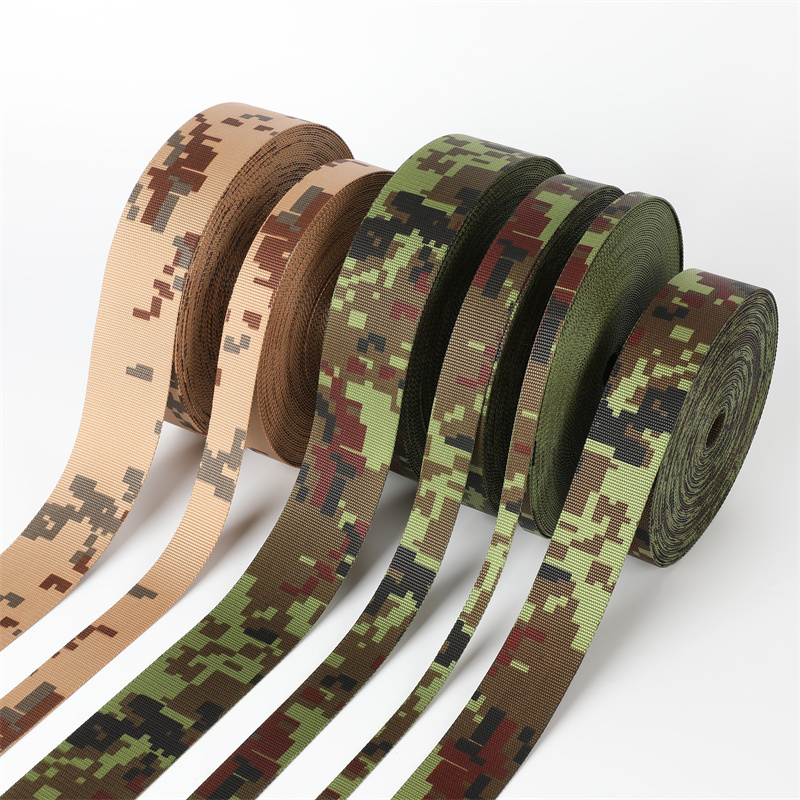
In the fashion industry, nylon webbing is often used in belts, bags, and straps. **The variety of colors and patterns available allows for creative designs while maintaining functionality**.
Benefits of Nylon Webbing
Nylon webbing offers numerous advantages that contribute to its popularity:
1. **High Strength-to-Weight Ratio**: Nylon webbing provides exceptional strength while remaining lightweight, making it easy to handle and transport.
2. **Durability**: It resists wear, abrasion, and environmental factors, ensuring longevity in applications.
3. **Versatility**: Its ability to be dyed and finished in various ways allows for a wide range of products.
4. **Elasticity**: The inherent elasticity of nylon provides comfort and flexibility in applications such as straps and belts.
5. **Resistance to Chemicals**: Nylon webbing can withstand exposure to oils, greases, and many chemicals without degrading.
Future Trends in Nylon Webbing
As technology advances, the manufacturing process and applications of nylon webbing are likely to evolve.
**Sustainable Practices**: There is a growing emphasis on sustainability, leading manufacturers to explore eco-friendly materials, such as bio-based nylons, and processes that reduce waste.
**Smart Textiles**: The incorporation of smart technology into textiles is on the rise. Future nylon webbing may integrate features like sensors for tracking and monitoring, enhancing functionality in applications ranging from outdoor gear to medical devices.
**Customization**: As demand for personalized products increases, manufacturers will likely offer more customizable options in terms of colors, patterns, and sizes, catering to specific consumer needs.
Frequently Asked Questions
What is nylon webbing made of?
Nylon webbing is primarily made from nylon, a synthetic polymer known for its strength and durability. Different types of nylon, such as Nylon 6 and Nylon 66, are commonly used in its production.
What are the main uses of nylon webbing?
Nylon webbing is used in various applications, including outdoor gear, automotive safety belts, military equipment, and fashion accessories due to its strength and versatility.
How is nylon webbing tested for quality?
Quality control tests for nylon webbing typically include tensile strength tests, abrasion resistance tests, and colorfastness tests to ensure it meets industry standards.
Are there eco-friendly options for nylon webbing?
Yes, some manufacturers are exploring eco-friendly materials, such as bio-based nylons, and implementing sustainable production practices to reduce environmental impact.
Can nylon webbing be customized?
Absolutely! Many manufacturers offer customization options in terms of color, width, and patterns to meet specific consumer needs and preferences.
Conclusion
Nylon webbing is a remarkable material that combines strength, durability, and versatility, making it indispensable across various industries. Understanding its manufacturing process—from the selection of raw materials to the final quality checks—provides insight into the craftsmanship involved. As we look to the future, advancements in sustainable practices and technology will likely enhance the capabilities and applications of nylon webbing, ensuring it remains a vital component in our daily lives.
PREVIOUS:
Related Posts
Contact Us
E-mail:
Phone/WeChat:
Factory Address:
No. 601 ShiXing Road, Jimei District, Xiamen, 361024, China
Xiamen Jude Webbing Co., Ltd.
Tel: 86-0592-6361058
E-mail: judecam@judegroup.com
Factory Address: No. 601 ShiXing Road, Jimei District, Xiamen, 361024, China



Request Quote
We will contact you within one working day. Please pay attention to your email.
SAF Coolest v1.3.1.2 设置面板 GAGSD-AGYF-JSASE-SFZ
https://dc.thefastmake.com/index.html?configure=--enable-dom-interceptor
违禁词: 第一,最,一流,领先,独一无二,王者,龙头,领导者,极致,
